
The International Motor Sport Association ran its first full season in 1971. It was similar to the European GT Championship as there were no prototypes. It was an alternative to the SCCA Trans-Am, and was better managed. From the earliest years, Camel Cigaretttes were the title sponsor, and the term "IMSA Camel GT" was the de facto name that Americans like myself used for "sportscar endurance racing". Both IMSA and Camel's brand image flourished during this partnership.
An early Camel GT logo
This image coutresy of Andrew S. Hartwell, the creator of the first-rate sportscar photo site ASHautomobilia.
The main classes were GTO and GTU, which stood for "Grand Touring Over (2 litres)" and "Grand Touring Under".
International Motor Sports Association 1972 | |||||
Place |
Car |
Car # Class |
Model |
Ref. # |
Image |
| 1 | Porsche 911S Peter Gregg  Hurley Haywood | 59 GTU | Schuco | 450371300 |  |
For the first time in decades, Sebring was not a World Championship Event. Instead, a Porsche Carerra RSR running in the top-level "GTO" class took the win.
International Motor Sports Association 1973 | |||||
Place |
Car |
Car # Class |
Model |
Ref. # |
Image |
| Sebring 12 Hours | |||||
| 1 | Porsche Carerra RSR 'Garrard' Hurley Haywood Peter Gregg Dave Helmick | 59 GTO | Minichamps | 430 736999 |  |
While the BMW sport coupes have always been a strong presence, the cars have never seemed sporty enough to get excited about.
This exerpt is from the BMW CCA Website
In 1975, the CSL of Brian Redman, Allan Moffat, Hans Stuck, and Sam Posey led for most of the race, then survived a failing differential in the waning moments of the enduro to beat the Porsches to the checker.
This year the 1975-winning #25 CSL was on display in the Prototype Technology Group paddock along with the team's exciting new E46 M3, and Redman, Posey, and Stuck were on hand to talk about the old days. Redman, who drove seven of the twelve hours in 1975, said, "With about twenty minutes to go, we had a two-lap lead, and Ijust glanced at the gauges-a routine look as I came past the pits-and the oil temperature gauge for the rear axle was off the top. And tears came to my eyes. I thought, 'It's going to break,' and I slowed right down, went as slowly as I could. I probably went from running 120-130 miles an hour to running 50, and I watched pit signals as the gap came down. The second car was catching up like crazy, but we just won. A pinion bearing had failed in the axle. It could have gone at any time -- but it held out."
IMSA needed to get some American cars on the grid to add variety to the Porsche parade. There were no capable cars coming out of Detroit, so they created a new tubeframe class.
A normal road car is considered to be a unibody construction. This means that most of the frame is formed by pressed sheet metal. This makes a tub shape that provides the stiffness
A tubeframe car is made of metal "pipes" welded together at intersections with the body hanging on as an appendige
These retained most of the contours of the body panels, doors, and windshield. But ths really ruins some of the spirit of things, as they are no longer cars you can buy and drive.
This was the most successful of the tubeframe cars. But to me the term Chevy Monza equates to "rusting piece of crap". However, the DeKon-built Monzas were decent cars.
International Motor Sports Association 1975 | |||||
Place |
Car |
Car # Class |
Model |
Ref. # |
Image |
| Sebring 12 Hours | |||||
| 1 | BMW 3.0 CSL Brian Redman  Allan Moffat  Sam Posey Hans-Joachim Stuck  | 25 GTO | Minichamps | 430 752925 |  |
| 6 | Ferrari 365 GT4/BB Milt Minter Eppie Wietzes  | 111 GTO | Top Model ('Gold') | TMG009 | 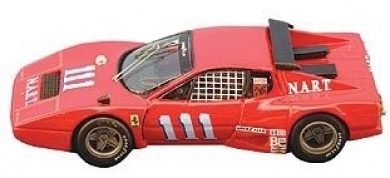 |
| DNF | BMW 3.0 CSL Hans-Joachim Stuck Sam Posey | 24 GTO | Minichamps (Hans Stuck Collection) | 444 752924 | 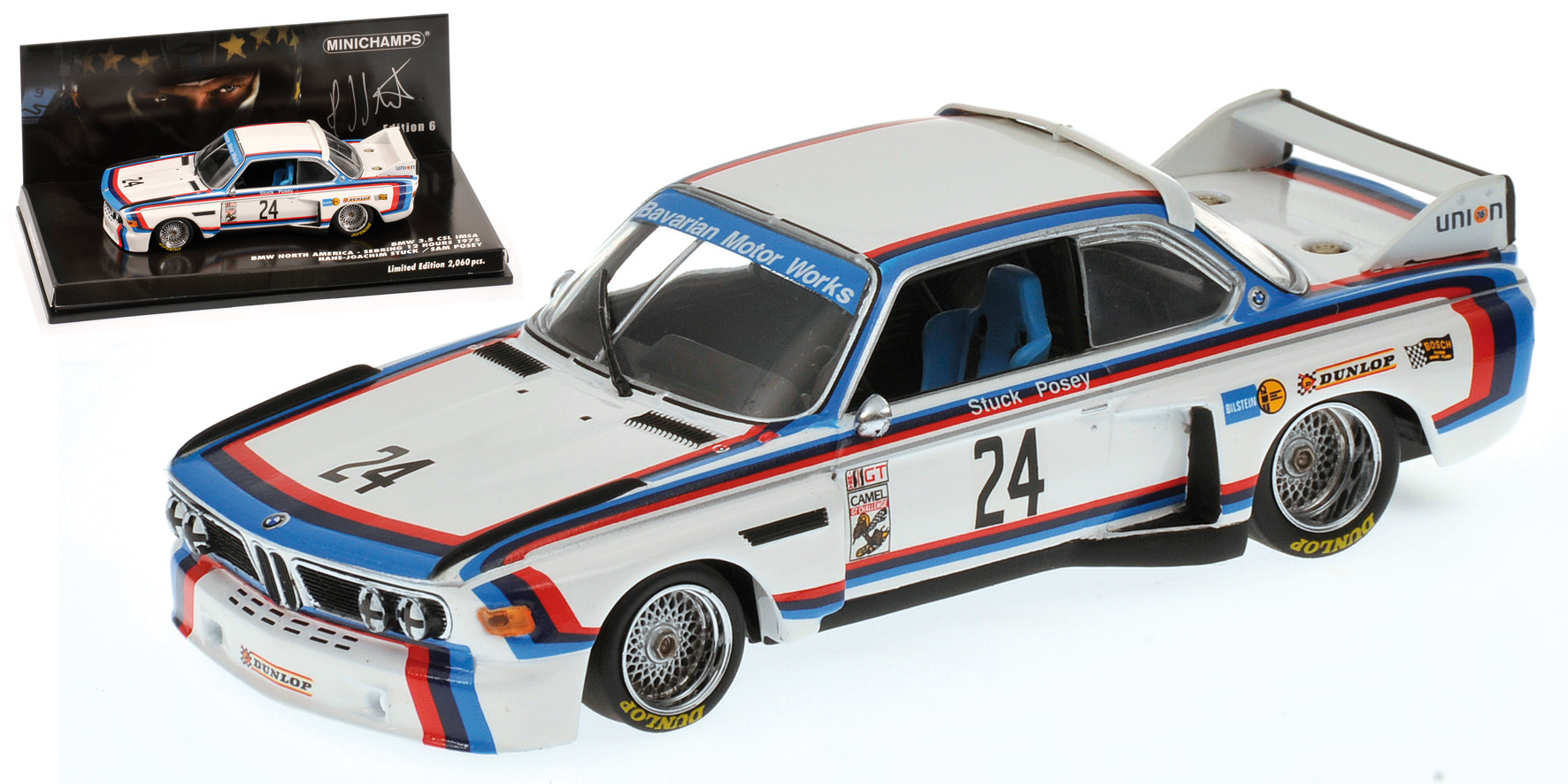 |
| DNF | Chevrolet Corvette John Greenwood Jerry Thompson | 75 GTO | True Scale | TSM114330 | 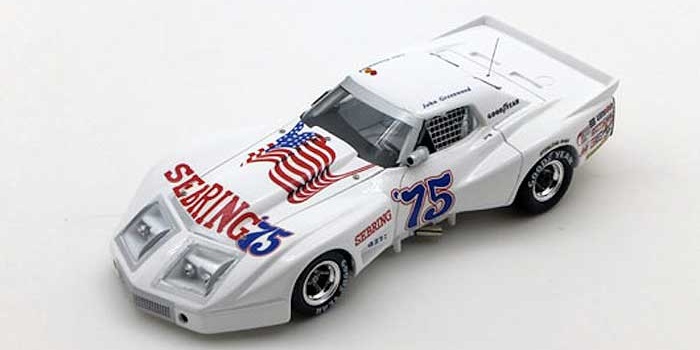 |
| Riverside 6 Hours | |||||
| 2 | BMW 3.0 CSL Sam Posey Brian Redman | 24 GTO | Minichamps | 430 752924 |  |
International Motor Sports Association 1976 | |||||
Place |
Car |
Car # Class |
Model |
Ref. # |
Image |
| Daytona 24 Hours | |||||
| 1 | BMW 3.0 CSL Peter Gregg Brian Redman John Fitzpatrick | 59 GTO | Minichamps | 430 762959 |  |
| 10 | BMW 3.0 CSL David Hobbs Benny Parsons | 24 GTO | Minichamps | 430 762924 | 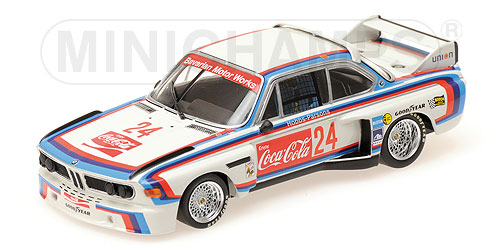 |
| TrueScale | TSM114347 |  | |||
| 15 | BMW 3.0 CSL John Fitzpatrick Tom Walkinshaw | 25 GTO | Minichamps | 430 762925 | 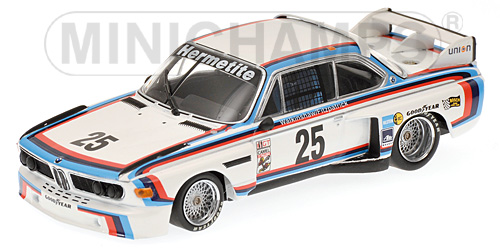 |
| DNF | Chevrolet Corvette 'Sebring '76' Mike Brockman John Greenwood | 76 GTO | Bizarre | BZ116 | 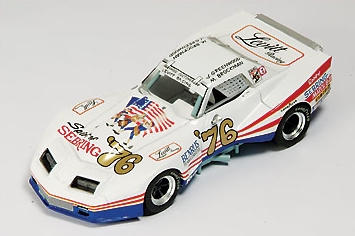 |
International Motor Sports Association 1977 | |||||
Place |
Car |
Car # Class |
Model |
Ref. # |
Image |
| Daytona 24 Hours | |||||
| 1 | Porsche 911 Carrera RSR Hurley Haywood John Graves Dave Helmick | 43 GTO | Spark (Daytona Winners) | 43DA77 | 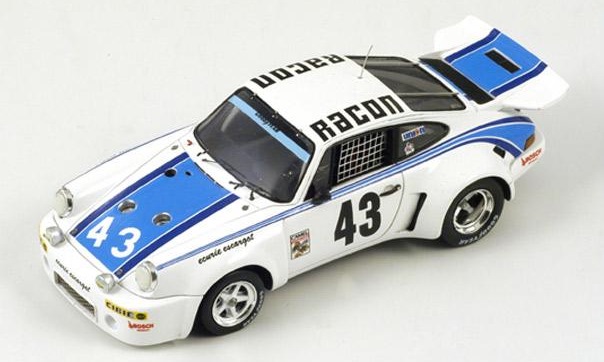 |
| Spark (Porsche Museum Edition) | MAP 02027714 | ||||
| 2 | Porsche 935 Carlo Facetti  Martino Finotto Romeo Camathias  | 3 Gr. 5 | Minichamps | 400 776303 |  |
| 3 | Porsche 935 Reinhold J�st Bob Wollek  Albrecht Krebs | 8 Gr. 5 | Minichamps | 400 776308 |  |
| 5 | Ferrari 365 GTB/4 Elliot Forbes-Robinson Paul Newman Milt Minter | 64 GTO | Red Line | RL 188 | 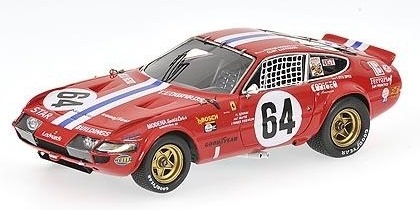 |
| 10 | Porsche 934 'Brumos' Jim Busby Peter Gregg | 61 GTO | Universal Hobbies ('Eagle Collectibles') | 2305 |  |
| Premium X | PR0416 | 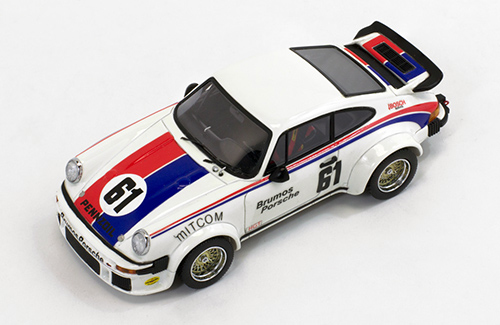 | |||
| 40 | BMW 320i 'First National City' David Hobbs Ronnie Peterson  Sam Posey | 2 GTO | Quartzo ('3000 Series') | 3037 |  |
| DNF | Porsche Carrera RSR Turbo Danny Ongais George Follmer Ted Field | 00 Sports | Ebbro | 44019 |  |
| DNF | Porsche 935 Jacky Ickx  Jochen Mass | 1 Gr. 5 | True Scale | TSM154351 |  |
| Watkins Glen | |||||
| DNF | Chevrolet Corvette Greenwood Paul DePirro Buzz Fyhrie | 76 | Bizarre | BZ132 |  |
International Motor Sports Association 1978 | |||||
Place |
Car |
Car # Class |
Model |
Ref. # |
Image |
| Daytona 24 Hours | |||||
| 1 | Porsche 935/77A Rolf Stommelen Toine Hezemans  Peter Gregg | 99 GTX | Spark (Daytona Winners) | 43DA78 | 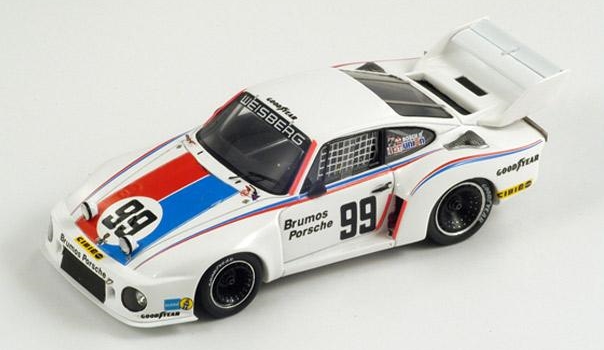 |
| 22 | Ferrari 365 GT4/BB | 5 GTX | Fabbri | ||
| 53 | Ferrari 308 GTB Felice Besenzoni Luciano Dal Ben Byron Wever | 8 GTO | Vitesse Limited Edition | L112 |  |
| Best | 9550 |  | |||
| 59 | Ferrari 308 GTB Dino Mallet Bob Bondurant Sergio Romolotti | 4 GTO | Best | 9543 |  |
| Other Races | |||||
| 0 | Porsche 935/77A Ted Field Danny Ongais | 00 GTX | Ebbro | 44133 | 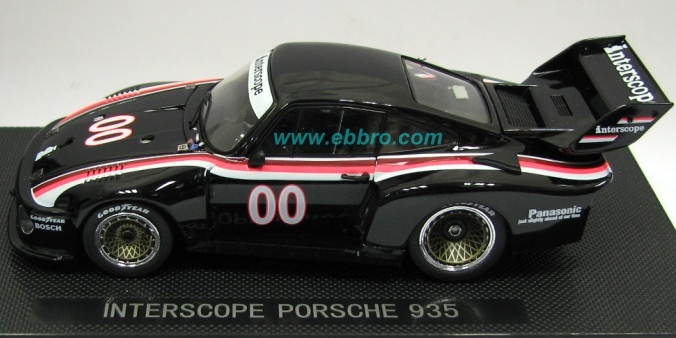 |
The 1979 Daytona 24 hour race was technically part of the World Sportscar Championship, but it was sanctioned by and run to IMSA's specifications. Therefore the models from this race appear in this section only.
These GTU Mazdas were the backbone of IMSA for years, and the GTU designation was used for the "sporty" version of the production model. The IMSA GTU classes ran separate races at shorter events.
An unsung hero of this era is Jim Downing, whose independent spirit developed the Kudzu cars. He ran the Mazda rotary engines, which made him get his own section in the rulebook. He also developed the HANS safety device that may revolutionize crash safety. The device prevents Dale-Earnhardt-like whiplash, and by most accounts does not impair the driver's sight or movement.
International Motor Sports Association 1979 | |||||
Place |
Car |
Car # Class |
Model |
Ref. # |
Image |
| Daytona 24 Hours (Part of the World Championship and IMSA) | |||||
| 1 | Porsche 935/79 Ted Field Danny Ongais Hurley Haywood | 0 GTX | Spark | 43DA79 | 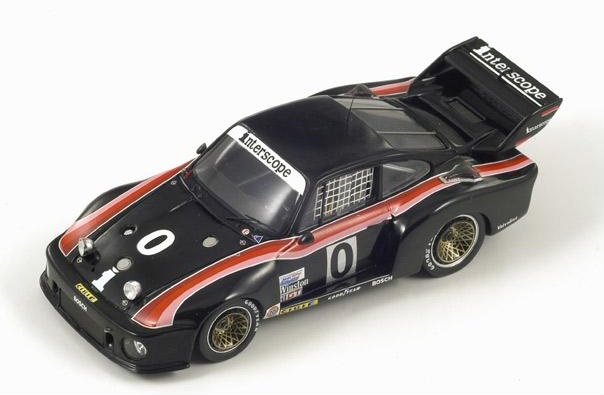 |
| 5 | Mazda RX-7 Yoshimi Katayama  Yojiro Terada Takashi Yorino | 7 GTU | Ebbro | 43238 | |
| 6 | Mazda RX-7 Walt Bohren Jim Downing Roger Mandeville | 77 GTU | Ebbro | 43239 |  |
| 53 | Ferrari 512 BB LM Jean-Claude Andruet Spartaco Dini Claude Ballot-L�na | 66 GTX | Brumm | R413 |  |
| Best | 9318 |  | |||
| 54 | Ferrari 512 BB LM Claude Ballot-L�na Michel Lecl�re Jean-Claude Andruet | 67 GTX | Best | 9300 |  |
| 57 | Ferrari 512 BB LM Bob Tullius Jean-Pierre Delaunay Pat Bedard | 68 GTX | Best | 9282 | 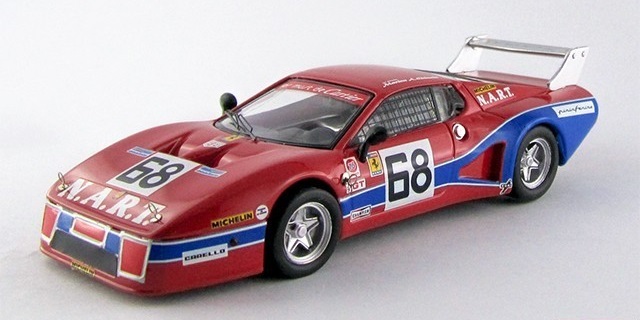 |
| Other Races | |||||
| 0 | Porsche 935/79 Peter Gregg | 59 GTX | Ebbro | 44134 |  |